Burberry's Zero Waste Commitment prohibits landfill or incineration of any finished product, raw material, or non-stock item, globally. Weavive provides the certified multi-material recycling infrastructure that makes the commitment verifiable.
The Challenge
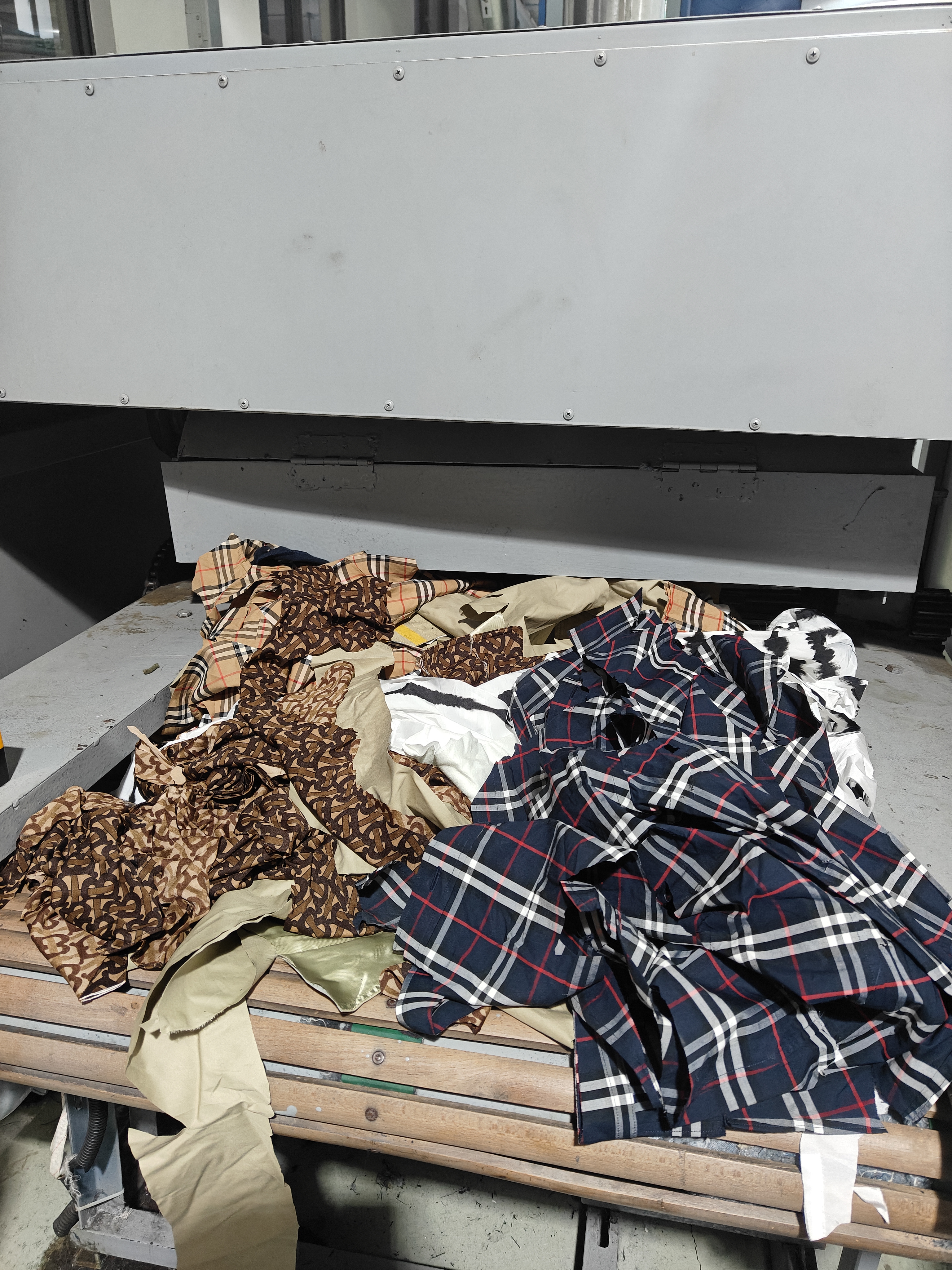
Unsold inventory, returns, and end-of-season stock for brands like Burberry carry brand risk that prevents liquidation through discount channels. Historically the answer was incineration. Regulatory pressure, consumer scrutiny, and Burberry's own Zero Waste Commitment have made that no longer acceptable. What's required is a recycling partner that can receive heterogeneous luxury goods (multi-material, mixed fiber, metal, leather, rubber), maintain strict chain of custody, and provide certified recycling documentation for every batch.
The Process
When Burberry goods arrive at Weavive's Zhangjiagang facility, operated by Shanhesheng (SHS), they enter differentiated processing streams matched to material type. Each stream routes to the appropriate recycling pathway, with documentation maintained throughout.
Sorted by fiber composition via AI hyperspectral imaging. Polyester streams proceed to enzymatic depolymerization (Suxin Technology) producing purified r-PTA monomers. Cotton, wool, and cashmere go to mechanical recycling (carding and fiber opening), producing recycled fiber for industrial applications.
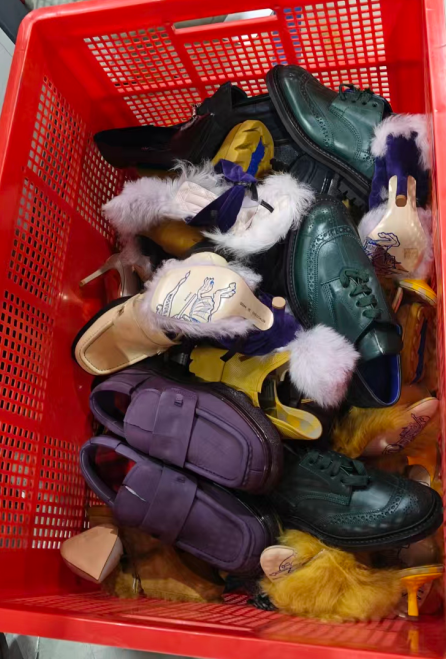
Shoes undergo material separation and shredding. Rubber soles are shredded into fine particles for reincorporation into new rubber compounds. Upper materials are sorted and channeled to the appropriate fiber or material recycling stream based on composition.
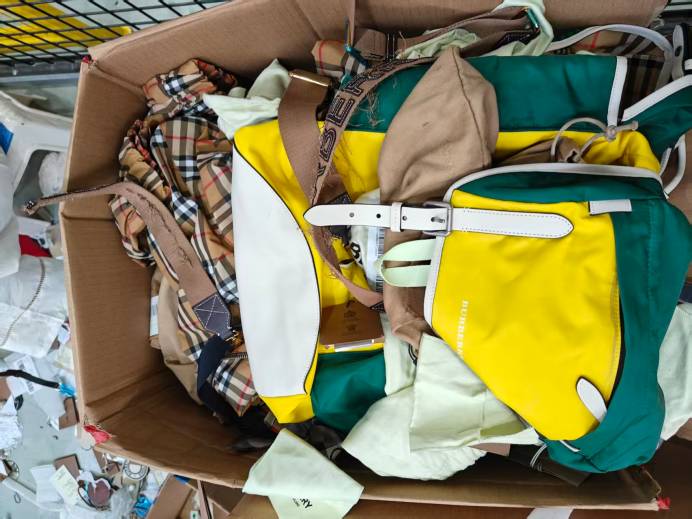
Jewelry, key chains, sunglasses, umbrellas, and other mixed-material accessories are disassembled into component materials. Plastic and metal streams are recycled independently through Weavive's partner network.
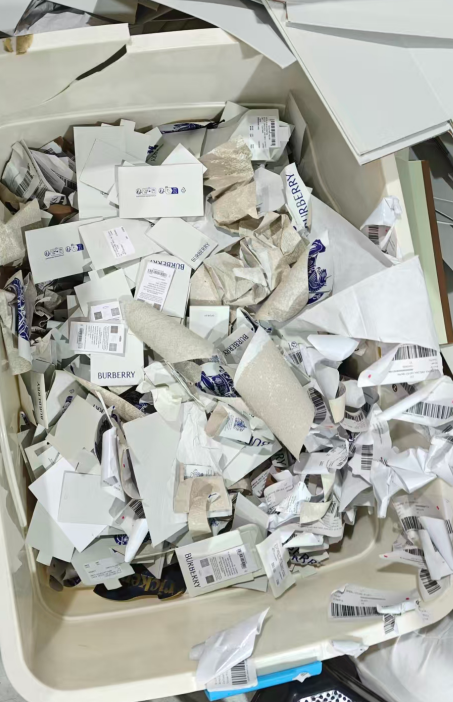
Leather bags and accessories are processed for leather recycling through Weavive's specialist material partners. Leather recycling is a dedicated capability within Weavive's multi-material service offering for luxury and heritage brands.
Security Protocol
Compliance
Weavive's multi-material infrastructure handles the complexity luxury goods recycling requires: heterogeneous inputs, strict chain of custody, and certified documentation for every batch.